There’s a stubborn myth that eating well requires expensive ingredients. Walk through any supermarket and you’ll see it reinforced: organic kale at a premium, ready-made salad bowls at four pounds a pop, protein powders promising the world. It’s a lie that costs households real money every week. Learning how to cook healthy meals on a budget isn’t about deprivation or clipping coupons until your fingers bleed. It’s about understanding where your food money actually goes and redirecting it. The real cost drivers in home cooking are straightforward: protein, fresh produce, and waste. Get those three under control and you can eat nourishing food for less than you’d spend on takeaway. This isn’t a spending contest. It’s a planning skill, and it’s learnable.
Where Your Food Budget Actually Goes
Most people assume their grocery bill is dominated by vegetables. In reality, it’s usually meat, dairy, and anything pre-prepared that eats the budget. Fresh produce, bought sensibly, is often the cheapest part of the shop. A bag of carrots costs less than a single chicken breast. A tin of chickpeas costs less than a block of cheddar. The perception that healthy eating is expensive comes from buying the wrong things in the wrong quantities.
Think about a typical week. If you’re buying chicken fillets, pre-cut fruit, and a couple of ready meals because you’re too tired to cook, your spend is high and your nutrition is mediocre. Swap that for whole ingredients you actually cook, and the numbers flip. The same money buys more food, better food, and enough leftovers to cover lunch the next day.
The other silent cost is waste. The average household throws away a shocking proportion of what it buys. That’s money in the bin. Every limp lettuce and forgotten half-onion is a small leak in your budget. Plugging those leaks is the fastest way to free up cash for better ingredients.
Budget Proteins That Pull Their Weight
Protein is where most food budgets quietly haemorrhage. Meat is expensive, and the lean cuts that diet advice pushes are often the priciest. But you don’t need steak to eat well. Some of the cheapest proteins are also the most versatile.
Eggs are the obvious starting point. A box of eggs costs less than a single portion of salmon and can become dinner in ten minutes. Omelettes, frittatas, scrambled eggs on toast with a pile of spinach — all cheap, all filling, all genuinely nutritious. Don’t overlook them as a dinner option, not just breakfast.
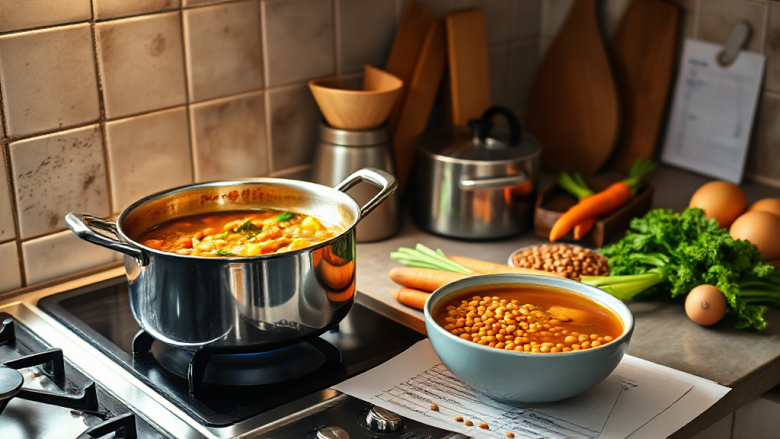
Tinned and dried beans, lentils, and chickpeas are the backbone of budget cooking. A tin of chickpeas costs pennies and can be roasted for a snack, blended into hummus, or thrown into a curry. Dried lentils need no soaking and cook in twenty minutes. They bulk out mince, thicken soups, and make a satisfying dal. If you eat meat, using it as a flavour rather than the centrepiece stretches it dramatically. A pack of mince stretched with lentils feeds four instead of two.
Tofu is often cheaper than meat and takes on whatever flavour you give it. Frozen fish fillets, particularly white fish and prawns, are often better value than the fresh counter and just as good when cooked properly. Tinned tuna and mackerel are cheap, high in protein, and need no cooking at all.
The trick is to stop treating meat as the main event. Build meals around beans, eggs, or grains, and let meat play a supporting role. Your wallet won’t notice the difference, but your body will.
Cheap Produce Strategies That Actually Work
Fresh vegetables can be cheap, but only if you buy them at the right time and in the right form. The first rule is to buy what’s in season. Out-of-season produce is flown in, priced up, and often disappointing. In-season vegetables are abundant, cheap, and taste better. A cabbage in winter costs almost nothing and makes slaw, soup, and stir-fry for a week.
The second rule is to embrace frozen and tinned produce. Frozen vegetables are picked and frozen at their peak, so they’re nutritionally comparable to fresh, sometimes better. They’re cheaper, last for months, and eliminate waste because you use only what you need. Frozen spinach, peas, and mixed berries are staples worth keeping on hand. Tinned tomatoes are the foundation of countless cheap meals and cost a fraction of fresh.
The third rule is to shop the odd bits. Wonky vegetables, reduced items near closing time, and market stalls at the end of the day are all legitimate sources of good food at lower prices. There’s nothing wrong with a slightly bendy carrot. It cooks the same.
Root vegetables deserve special mention. Carrots, potatoes, onions, and swede are cheap, filling, and keep for weeks. They form the base of soups, stews, and traybakes. A bag of potatoes costs less than a coffee and can feed you for days. Learn to love them.
Batch Cooking Without the Boredom
Batch cooking is the single most effective way to cut your food bill and improve your diet at the same time. Cook once, eat three times. It sounds dull, but it doesn’t have to be. The secret is to batch cook components rather than whole identical meals. Cook a big pot of lentils, roast a tray of vegetables, make a grain like rice or barley. Then mix and match through the week with different sauces and seasonings.
A pot of chilli made with mince and beans can become chilli with rice, chilli stuffed into a baked potato, or chilli topped with a cornbread crust. A tray of roasted vegetables can go into pasta, a frittata, or a grain bowl. A batch of tomato sauce can be pasta one night, pizza the next, and a base for soup later. This way you’re not eating the same thing four nights running, but you’re cooking once.
Invest in a few good containers and a freezer. Most cooked meals freeze well. Soups, stews, curries, and sauces all freeze beautifully. Portion them out and you’ve got homemade ready meals for the nights you can’t face cooking. That’s when takeaway usually wins. Having something in the freezer that costs a pound a portion and takes five minutes to reheat is a budget saver.
The time investment is modest. Two hours on a Sunday can set you up for the week. If that feels like a lot, start with one batch of something. A pot of soup and a tray of roasted vegetables. You’ll feel the difference in your wallet and your weeknights.
Reducing Waste and Stretching Every Ingredient
Waste is the quiet budget killer. If you’re throwing away a quarter of what you buy, you’re effectively paying 33% more for everything you eat. Fixing that is a matter of habit.
Plan your meals before you shop. Not in a rigid, joyless way, but enough that you know what you’re cooking and what you need. Check what you already have first. That half bag of lentils and the sad pepper in the drawer are the start of a meal, not a reason to buy more.
Learn to use every part. Vegetable scraps — onion skins, carrot peelings, mushroom stalks — can be kept in a bag in the freezer and boiled into stock. Stale bread becomes croutons or breadcrumbs. Overripe bananas become pancakes or get frozen for smoothies. Chicken bones make soup. This isn’t about being precious; it’s about getting full value from what you’ve paid for.
Store food properly. Keep herbs in water, wrap cheese in paper, keep potatoes in the dark. A little knowledge here saves real money.
Finally, get comfortable with ‘use it up’ meals. Fried rice, frittata, soup, and pasta are all forgiving dishes that can absorb whatever needs eating. A frittata can take any vegetable, any cheese, any herb. Soup can take almost anything. These are the meals that stop waste in its tracks.
Frequently Asked Questions
Is it really cheaper to cook healthy meals than to buy processed food?
Yes, in almost every case. Whole ingredients like dried beans, rice, oats, frozen vegetables, and eggs cost far less per serving than ready meals, takeaways, or processed snacks. The upfront cost of a bag of lentils seems higher than a packet of crisps, but it makes many meals. Per portion, home cooking wins comfortably.
How can I eat healthy meals on a budget if I don’t have much time to cook?
Focus on meals that are fast and forgiving. Eggs, tinned fish, frozen vegetables, and quick-cooking grains like couscous or pasta can make a meal in fifteen minutes. Batch cooking on a day off also helps. And keep a few homemade frozen portions for the nights you’re too tired to cook from scratch.
What are the cheapest healthy proteins?
Eggs, tinned tuna, dried lentils, chickpeas, beans, and tofu are consistently the cheapest. If you eat meat, chicken thighs and mince stretched with lentils or beans offer good value. Dairy like Greek yoghurt and cottage cheese is also inexpensive protein.
Do frozen vegetables count as healthy?
Absolutely. Frozen vegetables are frozen shortly after harvest, which locks in nutrients. They’re often cheaper than fresh and create zero waste because you use only what you need. They’re a smart choice for budget cooking.
Healthy eating on a budget comes down to a few habits: choose cheap proteins, buy produce in season or frozen, cook in batches, and waste nothing. Do that and the cost per serving drops below what you’d pay for processed food. You’re not spending more to eat well. You’re just spending smarter.